


PowerStep's Guide to the Best Insoles for Standing All Day
Whether you're a nurse working a 12-hour shift, a teacher moving between classrooms, or a warehouse employee spending hours on concrete floors, standing all day can take a toll on your feet. By the end of a long shift, you may notice aching arches, sore heels, tired legs, or discomfort that makes even a short walk to your car feel exhausting. The right footwear can make a meaningful difference, but sometimes the insoles that come with your shoes don't provide the combination of cushioning and support your feet need. The best insoles for standing all day do more than add a soft layer beneath your feet. They combine appropriate arch support, cushioning, heel stability, and pressure distribution to
Why Does Standing All Day Make Your Feet Hurt?
Standing may seem less demanding than walking or running, but remaining on your feet for extended periods places continuous demands on the muscles, joints, and connective tissues of your feet and lower legs. When you walk, your body moves through a cycle of loading and unloading as weight shifts from one foot to the other. During prolonged standing, particularly when you're relatively stationary, pressure can remain concentrated in certain areas for longer periods. Your foot muscles also make small adjustments to help maintain balance and posture. Over time, these demands can contribute to fatigue and discomfort.
A systematic review published in Applied Ergonomics examined the effects of cushioned insoles and flooring on workers who stand for prolonged periods. Researchers found moderate evidence that cushioned materials can help reduce musculoskeletal discomfort, although the evidence did not clearly establish that insoles are more effective than anti-fatigue mats. The takeaway? Cushioning can matter, but standing comfort depends on more than one product.
Why Hard Floors Can Make Standing More Uncomfortable
Concrete, tile, and other hard surfaces offer little cushioning beneath your shoes. For workers who spend much of their day in one location, this can make pressure and fatigue more noticeable. However, the surface isn't the only factor. Your footwear, foot mechanics, body position, activity level, and opportunities to move throughout the day all influence how comfortable you feel. That's why choosing supportive insoles should be part of a broader approach to workplace comfort.
What Makes Good Insoles for Standing All Day?
Not all insoles are designed for the same purpose; some prioritize softness, while others emphasize stability, arch support, or performance cushioning. For prolonged standing, finding the right combination is especially important.
1. Arch Support That Matches Your Feet
Your arches help support body weight and distribute forces across the foot. Their structure involves bones, ligaments, tendons, and muscles working together. When choosing insoles for standing all day, look for an arch support design appropriate for your foot shape and support needs.
People with low arches may have different requirements than those with high arches. Likewise, someone who prefers firm, structured support may find a flexible arch design more comfortable. The goal isn't to force every foot into the same position. It's to provide support that works with your individual foot mechanics. If you’re not sure about your arch type, learn how to find your arch height.
2. Cushioning That Provides Lasting Comfort
Softness feels good when you first step into a shoe, but immediate comfort doesn't always tell you how an insole will perform several hours later. For long workdays, cushioning should help manage underfoot pressure while maintaining a comfortable feel. Different cushioning materials provide different sensations. Memory foam tends to conform to the foot, while more responsive foams are designed to compress and rebound. Neither approach is automatically better for everyone. What matters is how the cushioning works with the support structure and the shoes you're wearing.
3. Heel Stability and Pressure Distribution
Your heels carry substantial loads during standing and walking. A contoured heel cradle can help position the heel within the insole and provide a more stable foundation. Pressure distribution matters, too. If too much pressure becomes concentrated beneath the heel or ball of the foot, discomfort may develop even when the insole feels soft overall. A well-designed orthotic considers how cushioning, arch support, and heel structure work together rather than focusing on a single feature.
4. Compatibility With Your Work Shoes
Even an excellent insole can cause problems if it doesn't fit your footwear. An overly thick insole may crowd your toes, create pressure across the top of your foot, or change how securely your heel sits inside the shoe. Full-length orthotics generally work best in footwear with sufficient interior space, especially when the original factory liner can be removed. Always evaluate your shoes and insoles as a complete system.
The Best PowerStep Insoles for Standing All Day
PowerStep offers several orthotic styles, but two particularly relevant options for prolonged standing are PowerStep bridge and Work insoles. Both provide arch support and cushioning, yet they approach comfort differently.
PowerStep bridge®: Adaptable Support and Cushioned Comfort

PowerStep bridge® Insoles are an excellent option for people who want a combination of flexible arch support and plush, responsive cushioning. Unlike traditional orthotics that emphasize a firmer support shell, bridge features PowerStep's adaptable arch support technology. Its structure flexes and adjusts to different arch heights while maintaining support, making it a versatile choice for people who prefer a less rigid feel.
What Makes bridge Different?
The bridge design combines three important comfort features.
- Adaptable Arch Support: Its specially engineered support structure adjusts to low, neutral, and high arches. This allows the arch to flex under load without simply collapsing, providing support that accommodates different foot shapes.
- Dual-Layer Cushioning: bridge combines slow-recovery memory foam with PowerStep energize foam™. The memory foam conforms to the foot for plush comfort, while energize foam is designed for shock absorption and responsive cushioning.
- Breathable Top Fabric: A moisture-wicking mesh top layer helps manage heat, friction, and perspiration during extended wear.
PowerStep's energize foam has demonstrated 55% energy return in third-party laboratory testing. This is a material-performance measurement rather than a guarantee of reduced fatigue for every wearer. Together, these features make bridge especially appealing for people who value cushioning but still want more structured support than a basic foam shoe liner provides.
Who Should Consider bridge Insoles?
bridge may be a good fit for teachers, retail employees, hospitality workers, and others who alternate between standing, walking, and everyday activities. It's also worth considering if you've found traditional firm orthotics uncomfortable or prefer an arch support design that adapts to your foot. The combination of memory foam and responsive cushioning makes bridge particularly appealing to people who prioritize a comfortable underfoot feel throughout the day. For a closer look at the technology, check out the PowerStep bridge: The Innovation of Adaptable Arch Support.
PowerStep Work: Durable Support for Demanding Workdays

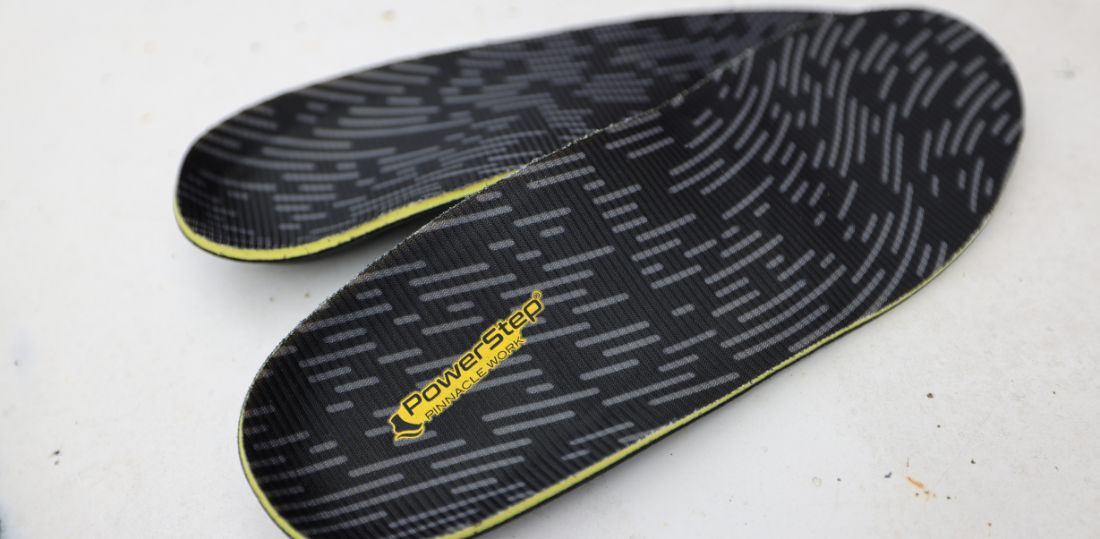
PowerStep Work Insoles are designed specifically for people who spend long hours working on their feet. They combine PowerStep's signature structured arch support with durable ShockAbsorb™ cushioning to help provide comfort and stability throughout demanding workdays.
What Makes Pinnacle Work Different?
Pinnacle Work emphasizes consistent support and cushioning for occupational footwear.
- Structured Arch Support: Its semi-rigid support design provides a stable foundation for the foot, particularly for individuals who prefer more traditional orthotic support.
- ShockAbsorb™ Cushioning: Durable cushioning is designed to help absorb impact and provide comfort during extended wear.
- Heel Cradle: A contoured heel helps position and stabilize the foot inside compatible footwear.
These features make Pinnacle Work a strong option for workers whose daily routines involve prolonged standing, frequent walking, and repetitive loading.
Who Should Consider Pinnacle Work Insoles?
Pinnacle Work is particularly relevant for healthcare workers, warehouse employees, manufacturing professionals, retail associates, and others who spend long shifts on hard flooring. It's also an option for people who wear work boots or supportive work shoes and want an orthotic specifically designed with occupational demands in mind. If you prefer a more structured arch support feel rather than adaptable cushioning, Pinnacle Work may be the better starting point.
PowerStep bridge vs. Pinnacle Work: Which Is Better for Standing All Day?
Both are good insoles for standing all day, but the best choice depends on what feels comfortable and supportive for your feet.
| Feature | PowerStep bridge® | Pinnacle Work |
|---|---|---|
| Primary focus | Adaptable support and cushioned comfort | Structured support for demanding workdays |
| Arch support | Flexible, adaptable arch structure | Semi-rigid, structured arch support |
| Cushioning | Memory foam + energize foam™ | Durable ShockAbsorb™ cushioning |
| Underfoot feel | Plush and responsive | Supportive and stable |
| Arch compatibility | Designed to adapt to low, neutral, and high arches | Best matched to appropriate arch and support needs |
| Ideal use | Standing, walking, and everyday comfort | Long shifts, work shoes, and work boots |
| Consider it if | You prefer adaptable support and a cushioned feel | You prefer traditional structured orthotic support |
Which Insole Should You Choose?
Choose bridge if you want adaptable arch support, memory foam comfort, and responsive cushioning for a mix of standing, walking, and everyday activity.
Choose Pinnacle Work if you want more structured arch support and durable cushioning designed specifically for prolonged standing and demanding work environments.
Neither is universally better. The right insole is the one that matches your foot mechanics, comfort preferences, and footwear. If you're still deciding, use the PowerStep Insole Finder for a more personalized recommendation.
Standing vs. Walking All Day: Why the Difference Matters
Here's something many insole comparisons overlook: standing all day and walking all day aren't exactly the same challenge. During walking, your feet repeatedly move through heel contact, weight transfer, and push-off. Cushioned materials experience repeated compression and rebound. During relatively stationary standing, the same areas of the foot may remain loaded for longer periods. Small postural adjustments still occur, but the movement pattern is different.
This helps explain why someone who finds an insole comfortable for walking may have different preferences when standing at a workstation for hours. If your job involves mostly stationary standing, prioritize comfortable pressure distribution and support while also considering anti-fatigue mats and opportunities to change position. If your job involves continuous movement, cushioning, stability, and secure shoe fit may become particularly noticeable. For jobs that combine both, bridge and Pinnacle Work are useful options to compare.
How to Make Standing All Day More Comfortable
Even the best insoles work better when they're part of a complete approach to foot comfort.
1. Rotate Between Standing and Movement
When possible, avoid remaining in exactly the same position for extended periods. Short walking breaks, shifting positions, or alternating between sitting and standing can help change how your feet and lower legs are loaded. If you work at a standing workstation, consider adjusting your schedule so you aren't standing continuously when the task doesn't require it.
2. Check Your Shoes Before Replacing Your Insoles
An insole can't fully compensate for footwear that's too narrow, excessively worn, or poorly fitted. Look for adequate toe room, a secure heel, and enough interior space for your orthotics. If your shoes have worn-down outsoles or no longer provide a stable foundation, replacing the insole alone may not solve the problem.
3. Consider Anti-Fatigue Mats
If you stand in one location for long periods, an anti-fatigue mat may be worth considering. Research suggests cushioned surfaces and insoles can help reduce discomfort during prolonged standing, although the evidence doesn't clearly favor one over the other. For some workplaces, combining appropriate footwear with a suitable standing surface may be more practical than relying on footwear alone.
4. Give New Orthotics Time to Feel Familiar
Switching from flat factory liners to structured orthotic insoles can change how your feet feel inside your shoes. If the support feels unfamiliar, begin with shorter periods of wear and gradually increase the time as tolerated. You shouldn't have to push through sharp pain, significant pressure, or worsening symptoms. If the insole causes discomfort, check the fit and consider professional guidance.
5. Replace Insoles When Support or Cushioning Declines
Even durable insoles experience wear. PowerStep generally recommends replacing insoles after approximately six months of regular use, although actual lifespan depends on activity level, frequency of wear, and product condition. Look for flattened cushioning, visible wear, damaged materials, or a noticeable reduction in comfort or support.
For more guidance, explore PowerStep's Insole Comparison Guide.
When Is Foot Pain From Standing a Sign of Something More?
Some foot fatigue after an unusually demanding day can be temporary. Persistent or worsening pain, however, shouldn't automatically be attributed to long work hours. Heel pain, arch discomfort, ball-of-foot pain, swelling, and numbness can have different underlying causes. If discomfort continues despite changes in footwear, insoles, and activity habits, consult a podiatrist or other qualified healthcare professional. Seek prompt medical attention for significant swelling, redness, warmth, numbness, weakness, difficulty bearing weight, or a wound that isn't healing. Orthotic insoles can be a helpful component of footcare, but they aren't a substitute for diagnosing an underlying condition.
Find the Right Support for Your Longest Days
Standing all day can be demanding, but your feet don't have to rely on the basic cushioning included with your shoes. The best insoles for standing all day balance appropriate arch support, cushioning, heel stability, and a comfortable fit inside your footwear. For people who prefer adaptable arch support and plush cushioning, PowerStep bridge offers a flexible design with memory foam and responsive energize foam. For workers who prefer more structured support and durable cushioning, Pinnacle Work is designed to meet the demands of long shifts and occupational footwear. Both provide thoughtful alternatives to standard factory insoles, but the right choice depends on your individual feet, work environment, and comfort preferences.
Explore PowerStep insoles for standing all day and work shoes, or use our Insole Finder to find the support that works for you.
Best Insoles for Standing All Day FAQs
Q: What are the best insoles for standing all day on concrete?
A: Look for insoles that combine cushioning, appropriate arch support, and heel stability. PowerStep Pinnacle Work is designed with durable ShockAbsorb™ cushioning for demanding work environments, while bridge offers adaptable arch support and memory foam comfort. The best choice depends on your footwear and support preferences.
Q: Are memory foam insoles good for standing all day?
A: Memory foam can provide a comfortable, conforming feel, but cushioning alone may not provide the structural support some people need. PowerStep bridge combines memory foam with responsive energize foam and an adaptable arch support structure, offering more than a basic memory foam liner.
Q: How often should you replace insoles if you stand all day?
A: PowerStep insoles generally last around six months or longer depending on usage, activity level, and wear. People who stand for extended shifts may notice cushioning compression or other signs of wear sooner. Replace your insoles when comfort, support, or structural integrity noticeably declines.


